
What is Nitrous Oxide Therapy?
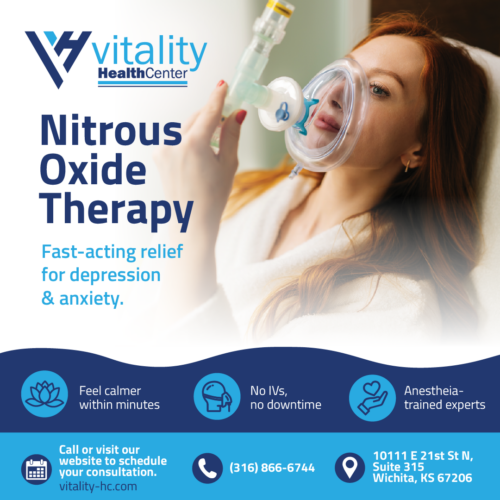
Nitrous Oxide therapy is a minimally invasive treatment used to help reduce symptoms of depression, anxiety, and emotional distress. It involves inhaling a carefully controlled mixture of nitrous oxide and oxygen through a comfortable nasal mask.
Nitrous Oxide has been safely used for decades in medical and dental settings for relaxation and pain control. More recently, it has gained attention for its rapid effects on mood and mental health.
This treatment may be recommended for patients who have not experienced adequate relief with traditional medications or who are seeking a fast-acting, non-invasive alternative.
Why We Use Precision Delivery & Monitoring
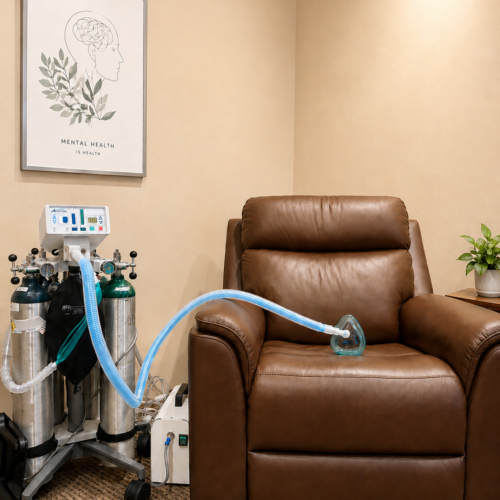
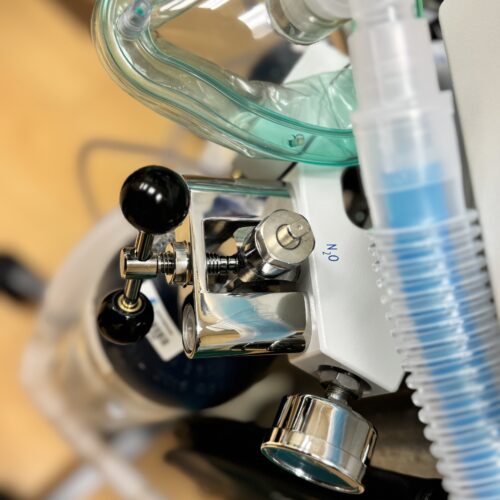
At Vitality Health Center, nitrous oxide therapy is provided under the supervision of anesthesia-trained providers using precision delivery and monitoring systems to:
- Deliver a precise and consistent concentration of nitrous oxide and oxygen
- Continuously monitor vital signs and patient response
- Adjust dosing in real time for comfort and effectiveness
- Maintain a high level of safety throughout the treatment
Conditions Treated
Nitrous Oxide therapy may be considered for patients experiencing:
- Treatment-resistant depression
- Generalized anxiety
- Acute stress or emotional distress
- Patients with limited response to traditional medications
How Nitrous Oxide Works
Nitrous Oxide affects several key pathways in the brain involved in mood regulation:
- Modulates NMDA receptors (similar pathway to ketamine-based treatments)
- Enhances calming neurotransmitter activity
- Promotes a rapid reduction in emotional distress
These effects may help “reset” certain brain signaling patterns associated with depression and anxiety.
What to Expect During Treatment
Preparation:
- A comprehensive health and psychiatric evaluation is completed
- Vital signs are obtained prior to treatment
- Patients are positioned comfortably in a monitored setting
During Treatment:
- A mask delivers a mixture of nitrous oxide and oxygen
- You remain awake, alert, and able to communicate
- Common sensations may include:
- Relaxation or calmness
- Light or floating feeling
- Tingling in the hands or feet
- Mild euphoria
After Treatment:
- 100% oxygen is administered (“washout”) to clear the gas
- Most patients return to baseline within minutes
- You are monitored briefly before discharge
Benefits of Nitrous Oxide Therapy
- Rapid onset of effects (often within minutes to hours)
- Non-invasive—no IV required
- Short treatment duration
- Minimal downtime
- Can be used alongside other treatments
- May improve mood and reduce anxiety quickly
Safety & Monitoring
Patient safety is a top priority. During treatment, we continuously monitor:
- Oxygen saturation
- Heart rate
- Blood pressure
- Level of responsiveness
Treatment is delivered in a controlled health environment by providers with advanced training in anesthesia and patient monitoring.
Who May Not Be a Candidate
Nitrous Oxide may not be appropriate for patients with:
- Vitamin B12 deficiency
- Certain lung conditions (such as pneumothorax)
- Recent ear or sinus surgery
- Pregnancy (relative contraindication)
- History of adverse reaction to nitrous oxide
A full health screening is completed prior to treatment to ensure safety.
Aftercare
Most patients tolerate treatment well and can resume normal activities shortly after the session.
- Mild fatigue or dizziness may occur briefly
- Nausea is uncommon but possible
- Effects typically resolve quickly after oxygen administration
Some patients notice improvement the same day, while others may benefit from a series of treatments depending on their individual needs.
Important Information
Nitrous oxide is FDA-approved for use in anesthesia and pain management. Its use for the treatment of depression, anxiety, and other mental health conditions is considered off-label.
Emerging clinical research suggests nitrous oxide may help improve mood symptoms in some individuals; however, treatment response varies from person to person. All treatment recommendations are based on a comprehensive health and psychiatric evaluation, clinical appropriateness, and provider judgment.
Start Your Treatment Journey
If you are struggling with depression or anxiety and looking for additional treatment options, Nitrous Oxide therapy may be an option.
Contact Vitality Health Center to schedule a consultation and learn more about whether this treatment is right for you.
Patient Resources & Research
- Clinical Research on Nitrous Oxide for Depression
- Additional Studies & Ongoing Research
- Key Takeaways from Research
- Phase 2 Clinical Trial – Nitrous Oxide for Treatment-Resistant Depression
A randomized clinical trial demonstrating that a single inhaled nitrous oxide treatment significantly improved depressive symptoms compared to placebo. - WashU Medicine Summary of Nitrous Oxide Depression Study
Highlights rapid improvement in depression symptoms, with some benefits lasting for weeks after treatment. - Systematic Review of Nitrous Oxide for Depression (2025)
A comprehensive review of multiple studies showing meaningful reductions in depressive symptoms and good tolerability.
- ClinicalTrials.gov – Nitrous Oxide Depression Studies
Ongoing and completed clinical trials exploring dosing, safety, and long-term outcomes. - Proof-of-Concept Trial – Rapid Antidepressant Effects
Early research demonstrating rapid and significant antidepressant effects in treatment-resistant depression. - Psychiatry Review Article on Nitrous Oxide
Review of randomized controlled trials evaluating nitrous oxide’s role in mood disorders.
- Nitrous Oxide may produce rapid improvement in depressive symptoms—sometimes within hours
- Benefits may last days to weeks after a single treatment
- Lower doses (25%) may offer similar benefits with fewer side effects
- Ongoing research continues to evaluate optimal treatment protocols
Watch: What to Expect
In this video, we will explain:
- How Nitrous Oxide therapy works
- What a treatment session looks like
- What you may feel during treatment
- Safety and monitoring
Learn More About Mental Health Treatment
- National Institute of Mental Health
- American Psychiatric Association
- Anxiety and Depression Association of America
These organizations provide trusted information on depression, anxiety, and available treatment options.